

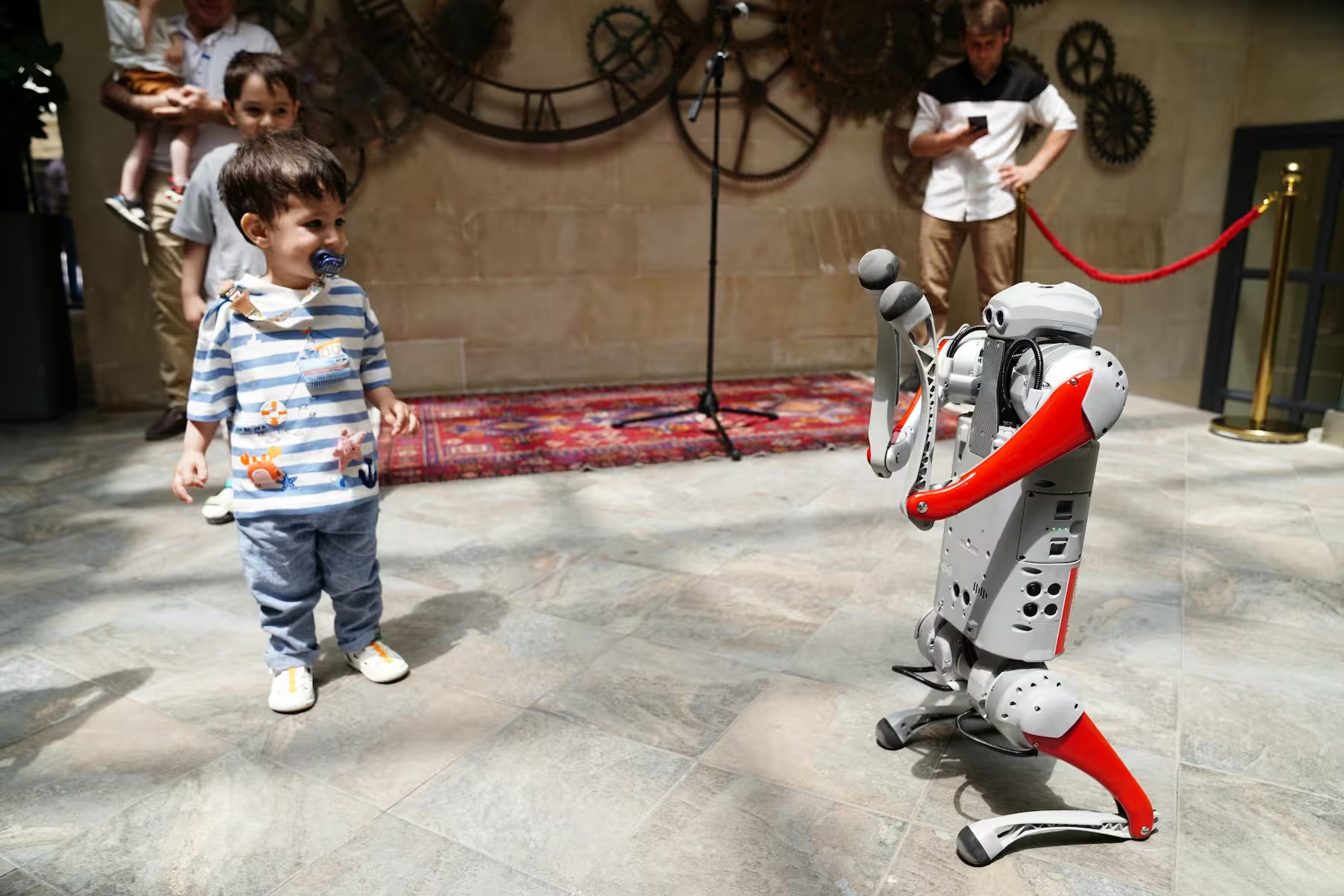
Robots have transformed from science fiction fantasies into essential tools that shape our daily lives. From manufacturing floors to our living rooms, robots are everywhere—but what exactly defines a robot? This comprehensive guide explores the definition, history, and diverse types of robots that exist today.
In this guide, you'll learn:
- The precise definition of what makes a machine a robot
- The fascinating history of robotics from ancient times to today
- Different types of robots and their unique applications
- How robots are transforming industries and daily life
- What the future holds for robotic technology
What Are Robots? A Clear Definition
A robot is an autonomous or semi-autonomous machine capable of performing tasks automatically, typically by following programmed instructions or responding to environmental inputs. While definitions vary, most robots share three key characteristics:
Core Characteristics of Robots
- Sensing: Robots can perceive their environment through sensors (cameras, LiDAR, touch sensors, etc.)
- Processing: They process information using onboard computers or control systems
- Actuation: They can physically interact with their environment through motors, grippers, or other actuators
The term "robot" comes from the Czech word "robota," meaning "forced labor" or "drudgery," first used in Karel Čapek's 1920 play "R.U.R." (Rossum's Universal Robots). However, the concept of automated machines dates back thousands of years.
The History of Robots: From Ancient Automata to Modern AI
Ancient Beginnings (3000 BCE - 1800 CE)
The history of robots begins with ancient automata—mechanical devices designed to mimic living beings. Ancient Egyptians created mechanical statues, while Greek engineers like Hero of Alexandria built automated theaters and mechanical birds. These early devices used water, steam, and mechanical gears to create the illusion of autonomous movement.
Industrial Revolution (1800s - 1950s)
The Industrial Revolution brought mechanization, but true programmable robots didn't emerge until the 20th century. In 1954, George Devol invented the first programmable robot arm, the Unimate, which was installed at a General Motors plant in 1961. This marked the birth of industrial robotics.
Modern Robotics Era (1960s - Present)
The 1960s saw the development of computer-controlled robots. In 1968, Shakey the Robot became the first mobile robot with artificial intelligence. The 1980s introduced collaborative robots (cobots), and the 2000s brought service robots into homes and businesses. Today, AI-powered robots can learn, adapt, and work alongside humans in increasingly sophisticated ways.
Types of Robots: A Comprehensive Overview
Robots can be categorized in numerous ways—by application, mobility, autonomy level, or design. Here are the major types:
1. Industrial Robots
Industrial robots are designed for manufacturing and production tasks. They include:
- Articulated Robots: Multi-jointed arms (6-axis robots) for welding, painting, assembly
- SCARA Robots: Fast, precise robots for pick-and-place operations
- Delta Robots: High-speed parallel robots for packaging and sorting
- Cartesian Robots: Linear motion robots for 3D printing and CNC operations
2. Collaborative Robots (Cobots)
Cobots are designed to work safely alongside humans without safety cages. They feature force sensors and safety systems that stop operation if they contact a person. Popular cobot manufacturers include Universal Robots, FANUC, and ABB.
3. Humanoid Robots
Humanoid robots mimic human form and movement. They're used for research, entertainment, and increasingly, practical applications. Notable examples include:
- Tesla Optimus (Tesla Bot)
- Boston Dynamics Atlas
- Unitree H1
- Figure AI robots
4. Service Robots
Service robots assist humans in non-industrial environments:
- Cleaning Robots: Vacuum cleaners, floor scrubbers, window cleaners
- Delivery Robots: Autonomous vehicles for last-mile delivery
- Medical Robots: Surgical systems like da Vinci, rehabilitation robots
- Hospitality Robots: Hotel service robots, restaurant servers
5. Autonomous Mobile Robots (AMRs)
AMRs navigate dynamically using sensors and AI, unlike traditional AGVs that follow fixed paths. They're revolutionizing warehouses, hospitals, and logistics operations.
6. Educational Robots
Designed for learning and STEM education, these robots teach programming, engineering, and problem-solving. Examples include LEGO Mindstorms, mBot, and Sphero robots.
Key Takeaways
- ✓Robots are autonomous machines that sense, process, and act on their environment
- ✓The term "robot" originated in 1920, but automated machines date back thousands of years
- ✓Modern robotics began with industrial robots in the 1960s and has evolved to include AI-powered systems
- ✓Robots can be categorized by application (industrial, service, educational), mobility (fixed, mobile), or design (humanoid, arm, wheeled)
- ✓Collaborative robots (cobots) are revolutionizing manufacturing by working safely alongside humans
- ✓Service robots are becoming increasingly common in homes, hospitals, and public spaces
- ✓The robotics industry continues to grow, with new applications emerging in AI, healthcare, and autonomous systems
Frequently Asked Questions
What's the difference between a robot and a machine?
While all robots are machines, not all machines are robots. Robots are distinguished by their ability to operate autonomously or semi-autonomously, sense their environment, and make decisions based on that information. A regular machine typically requires constant human operation.
Do robots need artificial intelligence?
Not all robots require AI. Simple robots follow pre-programmed instructions. However, modern robots increasingly use AI for tasks like navigation, object recognition, and learning from experience. AI enables robots to adapt to new situations and work in dynamic environments.
What was the first robot?
The first programmable robot was the Unimate, installed at a General Motors plant in 1961. However, automated mechanical devices existed for thousands of years before, including ancient Greek automata and mechanical clocks.
How do robots differ from androids?
"Robot" is a broad term for any autonomous machine. "Android" specifically refers to robots designed to look and act like humans. All androids are robots, but not all robots are androids. Humanoid robots may or may not be androids depending on their human-like appearance.
Can robots replace human workers?
Robots excel at repetitive, dangerous, or precision tasks, but they complement rather than completely replace human workers. Many industries use robots to augment human capabilities, allowing workers to focus on creative, strategic, or interpersonal tasks. The future likely involves human-robot collaboration rather than replacement.
What industries use robots the most?
Manufacturing leads in robot adoption, particularly automotive and electronics. Other major users include logistics and warehousing, healthcare (surgical robots), agriculture, construction, and increasingly, service industries like hospitality and retail.
Related Guides
Ready to Explore Robots?
Browse our marketplace to find the perfect robot for your needs, or explore more comprehensive guides.